Bias classification with rationale
Left / center / right, paired with the specific cues that informed the call (framing, sources, wording).
FairRead analyzes any article for political lean, explains why, and returns a concise summary you can trust.
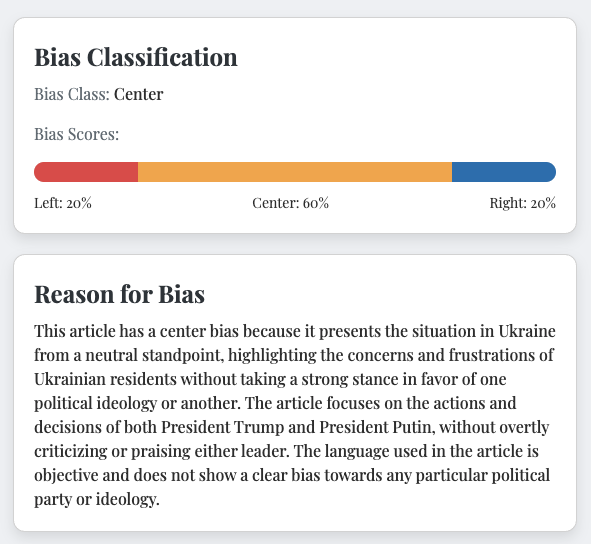
FairRead is a lightweight tool for evaluating news articles with clarity and speed. Paste a link, text, or PDF and receive an objective read on where the piece leans.
Results include a brief rationale so you can see the cues behind the call — not just the label. Your history stays private and helps you understand your own reading patterns over time.

Capabilities
Everything you need to judge an article—nothing you don't.
Left / center / right, paired with the specific cues that informed the call (framing, sources, wording).
Clear, skimmable summaries that preserve context and map claims to evidence.
See trends in outlets and perspectives over time—stored locally by default.
Analyze URLs, pasted text, or PDFs. Robust parsing for long-form pieces.
Deterministic modes for consistency and clear versioned outputs for sharing.
Open the Learn tab after analysis to review vocabulary, idioms, and grammar in the article language with English support.
Getting Started
Follow three quick steps to analyze any news article with clarity and transparency.
Enter a link, paste the text, or upload a PDF.
FairRead detects political bias, highlights key signals, and summarizes the piece.
See the bias label, rationale, and a concise summary you can trust.
Community
Join focused debate rooms on live topics, compare evidence, and see how perspectives shift—without sacrificing civility or privacy.
Join curated rooms on specific policy issues. Keep discussions on track with structured prompts and timeboxed rounds.
Back claims with links or PDFs. FairRead highlights bias signals in cited content so participants can assess sources quickly.
Moderation tools and private rooms reduce noise. Participation history stays local by default; share only what you choose.
Each week introduces a new debate prompt with a short neutral brief to frame the discussion.
Opening statements, evidence posts, and closing remarks keep conversations concise and comparable.
See a neutral wrap-up: main claims, strongest evidence cited, and perspective shifts over the week.